
Here are some of my latest thoughts on vscode… 

Articles on this page
💐 Repl Driven Development: /Editor Integrated REPLs for all languages/ 🔁



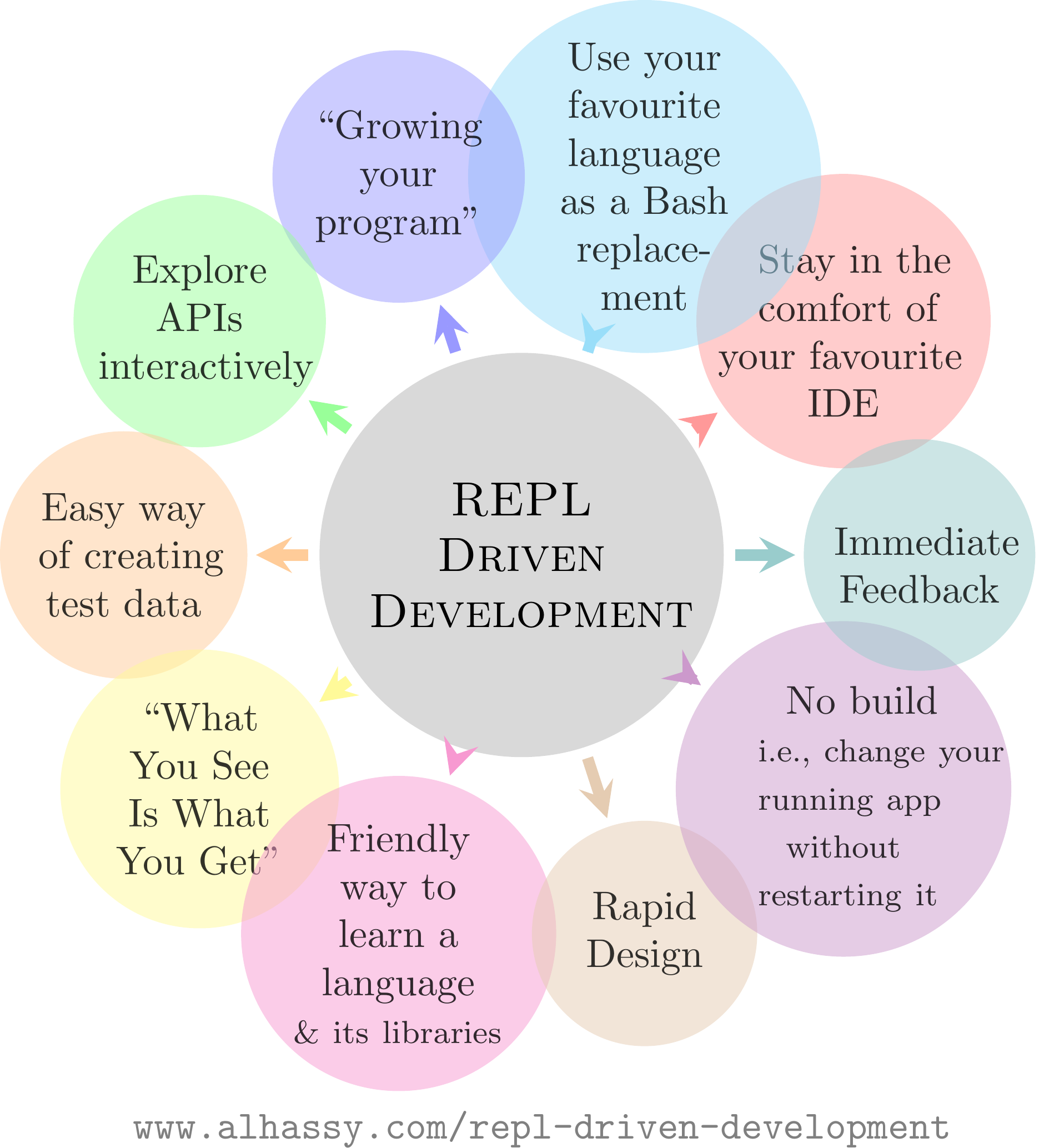
The 
That is, with Repl aided development, you make software by starting with an already working program (i.e., the repl) then incrementlly “teach it” to be the program you want, by defining & redefining things. Until satisfied, loop: Type/modify code in your editor, press some keys to evaluate what you wrote/modified in the currently running system, and explore/test the resulting runtime.
RDD is programming emphasising fast & rich feedback from a running system. RDD is fantastic for quickly teaching/exploring an idea; as such, the running example of this article will be on servers —no prior experience with servers is assumed. The main examples will be in JavaScript, Python, and Java. (Since JavaScript is just Lisp in C clothing, we will not discuss Lisp.) Since Java is verbose, the power of REPLs really pays off when exploring a new idea. We see how many imports and setup-code simply disappear in the RDD approach, letting you focus on the core idea you're exploring/teaching. For comparison, a traditional self-contained Java server program is ~30 lines long whereas the focused RDD approach is ~4 lines long.




tdlr: This library provides the Emacs built-in C-x C-eC-x C-e ∷ eval-last-sexp
Evaluate sexp before point; print value in the echo area.
Interactively, EVAL-LAST-SEXP-ARG-INTERNAL is the prefix argument.
With a non ‘-’ prefix argument, print output into current buffer.
This commands handles ‘defvar’, ‘defcustom’ and ‘defface’ the
same way that ‘eval-defun’ does. See the doc string of that
function for details.
Normally, this function truncates long output according to the
value of the variables ‘eval-expression-print-length’ and
‘eval-expression-print-level’. With a prefix argument of zero,
however, there is no such truncation.
Integer values are printed in several formats (decimal, octal,
and hexadecimal). When the prefix argument is -1 or the value
doesn’t exceed ‘eval-expression-print-maximum-character’, an
integer value is also printed as a character of that codepoint.
If ‘eval-expression-debug-on-error’ is non-nil, which is the default,
this command arranges for all errors to enter the debugger.
(fn EVAL-LAST-SEXP-ARG-INTERNAL)
behaviour for
arbitrary languages, provided they have a primitive cli REPL.

💐 Making VSCode itself a Java REPL 🔁


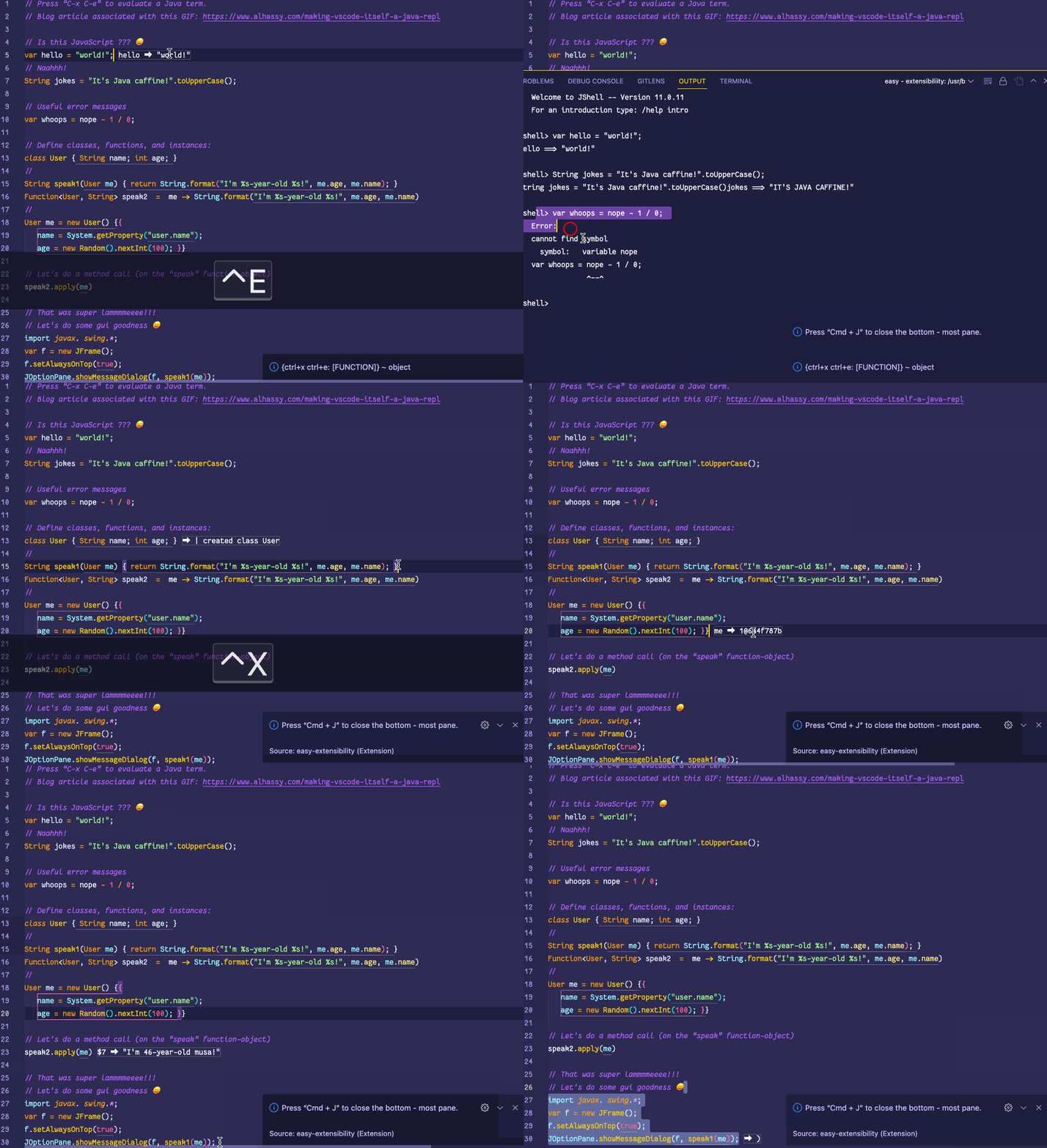
VSCode evaluates Java code wherever it sees it, by sending it to a JShell in the background, and echos the results in a friendly way!
This is achieved with a meta-extension for VSCode that makes VSCode into a living, breathing, JS interpreter: It can execute arbitrary JS that alters VSCode on-the-fly. (Inspired by using Emacs and Lisp!)
The relevant docs show how to make a similar REPL for Python, Ruby, Clojure, Common Lisp, JavaScript, Typescript, Haskell, and of-course Java.
💐 VSCode is itself a JavaScript REPL 🔁
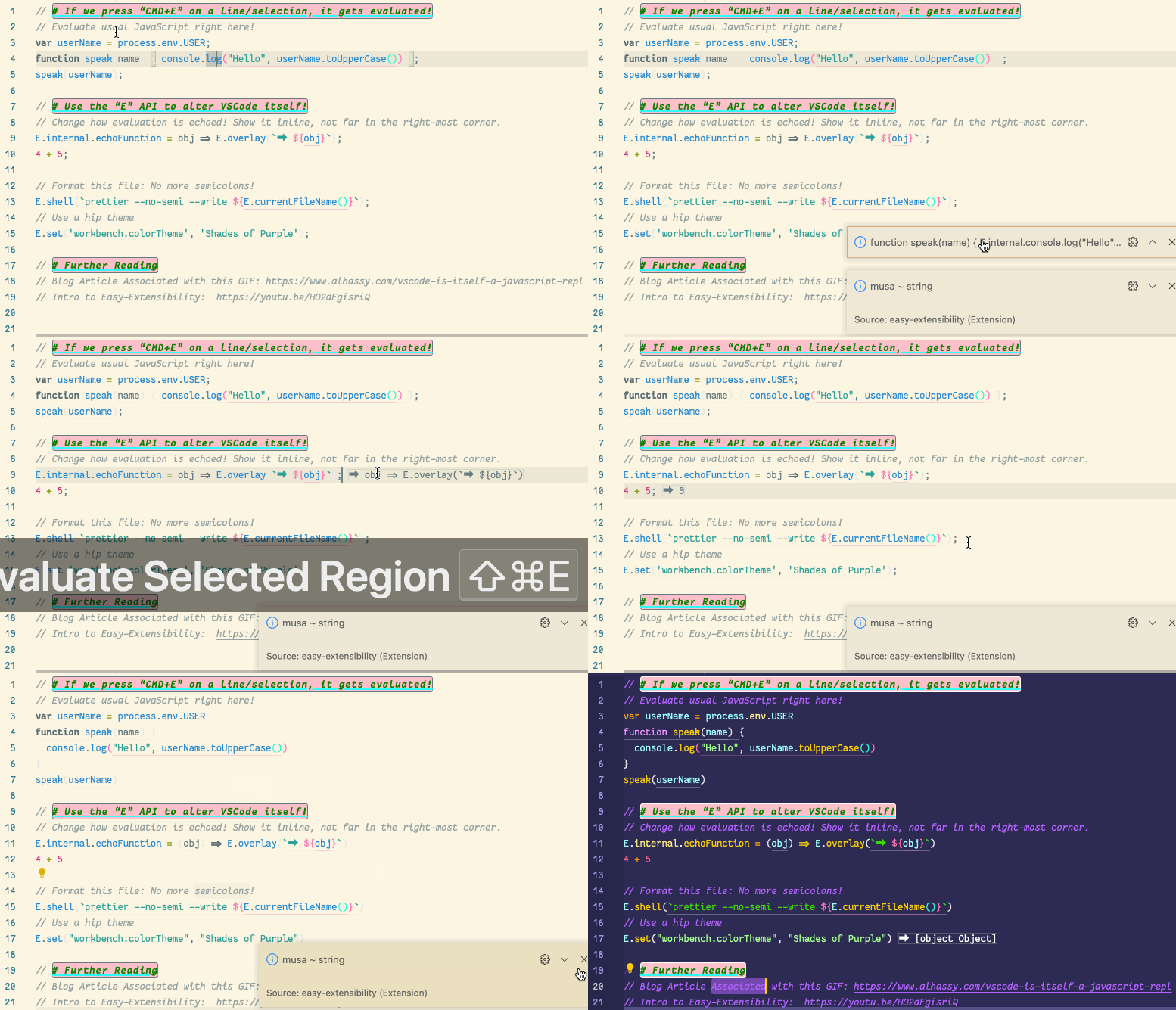
A meta-extension for VSCode that makes VSCode into a living, breathing, JS interpreter: It can execute arbitrary JS that alters VSCode on-the-fly. A gateway into the world of Editor Crafting!
| (Inspired by using Emacs and Lisp!) |

Life & Computing Science by Musa Al-hassy is licensed under a Creative Commons Attribution-ShareAlike 3.0 Unported License